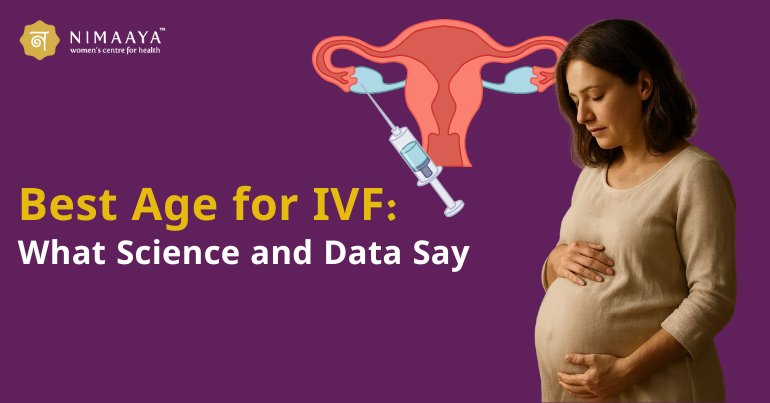
If you’re considering IVF, the question that naturally comes up is: what’s the best age to do it? The honest, data-backed answer is that age matters—a lot. Female age affects the number of eggs that can be retrieved, the proportion of chromosomally normal (euploid) embryos, embryo implantation potential, miscarriage risk, and ultimately the chance of a healthy live birth. Male age matters too, though its effects are generally subtler and more variable.
Below, we deconstruct what big registries and leading professional organisations say about IVF success by age, how and why age makes such a difference biologically, and what intelligent, age-sensitive planning looks like—no matter if you’re trying soon, planning forward, or back to treatment after a hiatus.
The Short Answer
Peak IVF results using your eggs are normally in the late 20s to early 30s, with a slow fall after ~34–35 and an accelerated one after 38–40. National registry snapshots reflect considerably higher birth rates among patients aged <35 in comparison to those in their 40s.
By the early 40s, birth rates per cycle with autologous (own-egg) IVF are low, primarily due to the high fraction of chromosomally abnormal embryos; donor eggs can “reset” age decline because embryo genetics are derived from the younger donor.
Age of the male may affect semen quality and certain reproductive and obstetric risks, but the age of the female partner is typically the main determinant of IVF success.
What the Big Datasets Show
National registry trends
United States (CDC ART National Summary): The CDC’s ART national summary (latest update December 10, 2024, for 2022 cycles) indicates the overall live-birth rates declining with rising patient age; the mean patient age is ~36, and live-birth outcomes are substantially better below 35 than 40+.
United Kingdom (HFEA 2023 Trends & Figures): HFEA’s recent trends report reports initial fresh-transfer birth rates at approximately 35% for 18–34 years old, and around 5% for 43–44 years old when using their own eggs, highlighting the dramatic age gradient.
These are not identical systems (nations vary in laboratory practices, finance, and patient distribution), but both indicate the same pattern: age is the strongest IVF success predictor using your own eggs.
Why age differences of small significance
In populations, euploidy (chromosomal normality) decreases with age. In studies of embryos screened with PGT-A, aneuploidy is seen at ~25–30% below 30, rising to ~65–70% at 40+: an important reason implantation and live-birth rates decrease and miscarriage risk increases with increasing maternal age.
Professional guidance emphasises cumulative live birth rate (CLBR)—the chance of a baby after using all good embryos from one stimulation—as the outcome that matters most. While modern stimulation and freezing help, age still governs how many usable embryos you’ll end up with.
Biology 101: What Age Changes
- Ovarian reserve: Egg numbers (AMH, AFC) fall steadily; fewer follicles mean fewer eggs at retrieval and fewer embryos to work with.
- Egg quality: The machinery of meiosis ages; the incidence of chromosomal defects increases, creating more aneuploid embryos that either won’t implant or result in miscarriage.
- Uterine environment: The uterus is receptive much longer than the ovaries are reliably fertile, so donor eggs in older women have much higher success rates than own-egg IVF in the same age range.
- Male factor: Older paternal age can be associated with alterations of semen parameters and some risks, but its impact on IVF outcome is typically less than maternal age.
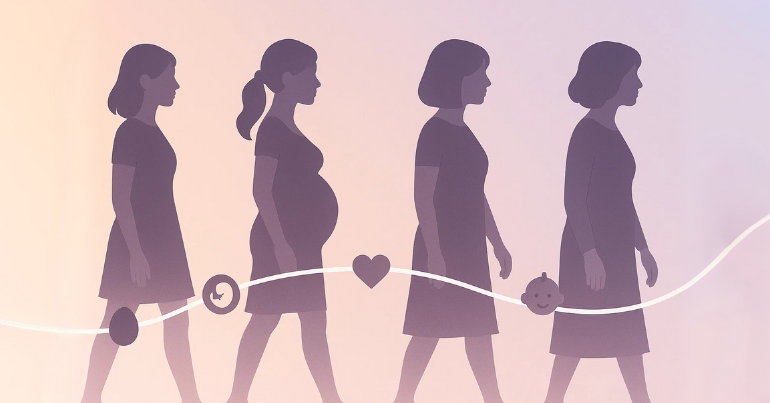
Age Bands: What to Expect
Note: “Success” below denotes population-level trends; your prognosis is based on ovarian reserve markers, embryo quality, lab standards, and other health characteristics.
Under 30
- Outlook: Overall, great ovarian reserve and good euploidy rates; the majority of couples conceive spontaneously within one year unless a known factor is present.
- IVF context: Frequently being undertaken for tubal ligation, extreme male factor, or genetic purposes. When IVF is required, per-transfer results are good, and cumulative success per stimulation is great.
30–34
- Prognosis: Still extremely favourable. Most clinics view this as the “sweet spot” for IVF with own eggs—good egg yield and embryo quality.
- IVF background: Very good likelihood of obtaining at least one euploid embryo per stimulation for most patients, but individual outcomes are variable. Registry data still reflect strong live-birth rates.
35–37 (Early Advanced Maternal Age)
- Prognosis: The decline sets in gradually, but results remain favourable for most.
- IVF setting: Retrievals continue to provide a valuable number of embryos for a lot of patients, but aneuploidy rates increase, so the number of euploid embryos per cycle can decrease.
38–40
- Prospects: The gradient becomes steeper. Fewer eggs per retrieval and increased aneuploidy; cumulative success can still be acceptable if several embryos are received, but per-cycle live-birth is lower.
- IVF setting: Numerous patients in this setting are interested in having multiple cycles, add-ons to enhance response, and PGT-A to prevent aneuploid embryo transfers. Counselling ought to be candid regarding the number of embryos that would probably be required per live birth.
41–42
- Prospects: Low per-cycle live birth rate using one’s eggs, primarily owing to significant aneuploidy; risk of miscarriage increases. Some will be successful with multiple retrievals and judicious selection of embryos, but time frames should be realistic.
- IVF setting: Explain the use of donor eggs, which can increase live-birth rates significantly because embryo genes are derived from a younger donor.
43–44 and higher:
- Prospects: With autologous eggs, population-level fresh-transfer birth rates are in the low single digits; clinics tend to have upper age cut-offs for own-egg IVF due to extremely low success and safety issues.
- IVF context: Donor eggs are typically the most effective path to parenthood; live-birth rates per transfer with donor eggs are substantially higher than same-age own-egg cycles.
इरेक्शन म्हणजे काय?(Erection Meaning in Marathi) कारणे आणि उपचार
Egg Freezing Timing (If You’re Planning)
If you’re not ready to conceive now but want to preserve options, oocyte cryopreservation works best before 35, and ideally before 32–33, when more eggs are recoverable per cycle and a higher fraction are euploid. Even in specific conditions like endometriosis, European guidelines advise early fertility-preservation counselling. Remember that egg freezing doesn’t guarantee a baby; it improves probabilities by banking younger eggs.
PGT-A: Does Testing “Fix” Age?
Preimplantation genetic testing for aneuploidy (PGT-A) aids in selecting chromosomally normal embryos to be transferred, lowering miscarriages and time-to-pregnancy in most situations. But it does not make euploid embryos—it simply chooses from what you’ve got. If age diminishes the number of normal embryos, PGT-A can’t counteract the low embryo supply. Research again and again demonstrates euploidy decreases with age; modelling and cost-effectiveness analyses mirror that fact.
Safety & Health as Age Progresses
With advancing age, some risks of pregnancy (hypertension, gestational diabetes, preeclampsia) and, with multiple gestations, maternal-fetal complications rise. Contemporary IVF highly recommends single-embryo transfer (SET) to reduce multiples without compromising success—particularly in older patients, where obstetric risk is greater. Ethical advice regarding reproduction at older ages stresses weighing patient autonomy against considerations of maternal/offspring health.
Regional Regulations: An India-Specific Note
India’s Assisted Reproductive Technology (Regulation) Act, 2021 and following Rules (2022) formalise several aspects of ART care, such as age eligibility. women aged 21–50 years, men aged 21–55 years for ART services (with few exceptions). This is a legislative structure, not a guarantee of success; clinical counselling continues to depend on individual prognosis based on age.
Putting It Together: A Practical, Age-Aware Game Plan
Under 35 and attempting soon:
If you qualify for IVF (e.g., tubal factor, severe male factor, genetic indications), prognosis using your own eggs is typically good. Plan SET to keep multiples low and freeze additional embryos for subsequent offspring.
35–37:
Plan ahead: harvest sufficient eggs to plan for multiple euploid embryos if you intend to have a larger family. Discuss PGT-A advantages/disadvantages, stimulation customisation, and embryo-banking.
38–40:
Anticipate fewer euploid embryos per cycle; prepare for the chance of more than one stimulation. Maximise pre-IVF health, use adjuvants only if backed by evidence, and apply PGT-A when it aligns with your objectives.
41–42:
Discuss time, cost, and anticipated yield openly. A few patients do well on their own eggs, but many switch to donor eggs to enhance live-birth rate and reduce time-to-baby.
43+ or reduced ovarian reserve at any age:
Don’t discuss donor eggs yet. If having your own eggs, agree on what embryo numbers and per-transfer chances are likely. Consider whether your family plans and timelines align with the effort involved.
Not ready yet:
Freeze eggs sooner rather than later, with a firm target number depending on age and family-size plans. Keep in mind: egg freezing enhances possibilities; it’s not an insurance policy for surefire success.
Key Takeaways
The success of IVF is best with own eggs in the late 20s to early 30s, decreases gradually after ~35, and more precipitously after 38–40 due to increasing embryo aneuploidy.
Donor eggs significantly enhance outcomes for older recipients by avoiding age-related genetic decline.
Early planning—to attempt now or to bank eggs to save fertility—gives more choices and greater cumulative probabilities.
For Indian law, ART eligibility usually covers women 21–50 and men 21–55; your prognosis depends on individual assessment, not merely attainment of the age criterion.
Conclusion
IVF success is strongly influenced by age because it influences both the number of eggs available and the number of embryos that are chromosomally normal. If you’re under 35 and IVF is indicated, prospects with your eggs are generally strong. Between 35–40, thoughtful strategy—individualised stimulation, single-embryo transfer, and selective use of PGT-A—helps preserve the best odds. Over 40, success with your eggs becomes less likely per cycle; donor eggs can restore high chances for many patients. Wherever you land on this continuum, the best bet is to obtain customised counselling early, match treatment to family goals. And prepare for cumulative success, not single-cycle yields.
If you are weighing your choices and wish age-relevant advice—whether for IVF today. Embryo/egg freezing to have later, or looking into donor eggs. Nimaaya IVF Centre is here to assist you in taking the information and creating an easy-to-understand, individualised plan and guide you through each stage of the process.
FAQs
Is there one best age for IVF?
There is no one magic number, but the late 20s to early 30s usually provides the optimal balance of egg number and egg quality for own-egg IVF. After ~35, it falls off gradually, and after 40, more so.
If my cycles remain regular at 40+, do I then continue to have lower IVF success?
Yes. Regular cycles don’t reverse egg-quality decline; aneuploidy rates are the primary limiter.
Can PGT-A trump age?
PGT-A can select the best embryo and reduce miscarriage risk, but it cannot create euploid embryos. Age still limits how many euploid embryos you’ll have to choose from.
Do donor eggs really change the game?
Yes. Since the embryo’s chromosomes belong to the donor, donor-egg IVF success will tend to mirror the donor’s age, frequently >50% per transfer in most programs—far greater than same-age own-egg cycles in the 40s.
What about male age?
Advanced paternal age may impact semen quality and be linked to some reproductive or offspring risks, but it’s usually less predictive of IVF success than mom’s age.
What are the guidelines focusing on now?
Current advice focuses on cumulative live birth rate, single-embryo transfer, and tailored ovarian stimulation—all within a realistic, age-conscious strategy.