Why Advanced Sperm Selection Matters in IVF
It’s natural to focus on egg quality when thinking about IVF, but sperm quality matters just as much. Fertilisation, embryo development, and even early pregnancy outcomes depend on the genetic material carried by the sperm that fertilizes the egg.
Egg quality alone isn’t enough. Even with a healthy, mature egg, if the fertilizing sperm carries damaged DNA, the resulting embryo may struggle to develop normally. This is one reason why some couples with seemingly unexplained IVF failures are advised to look more closely at sperm quality.
DNA integrity is central to embryo development. Sperm DNA fragmentation — small breaks or damage in the genetic material — has been linked in research to lower fertilization rates, slower embryo development, and a higher chance of miscarriage in some cases. Not every sperm with a normal shape and good movement necessarily has intact DNA, which is part of why standard sperm selection has limits.
Fertilization quality depends on more than sperm count and motility. A semen analysis tells your doctor about sperm count, movement, and shape, but it doesn’t reveal DNA quality on its own. This is where advanced embryology techniques, including PICSI, try to add value — by helping embryologists identify sperm that are more likely to be mature and have healthier DNA.
The role of advanced embryology. Modern IVF labs use a combination of tools, including high-magnification sperm selection, DNA fragmentation testing, and physiological selection methods, to give each embryo the best possible starting point. None of these tools guarantees an outcome, but together they represent a more thoughtful, individualized approach to fertility care.
How Does PICSI Work? Understanding the Science Behind Physiological Sperm Selection
Why Mature Sperm Naturally Bind to Hyaluronic Acid
During natural conception, sperm must pass through the cumulus cells surrounding the egg, which are rich in hyaluronic acid, before they can reach and fertilize the egg. Only sperm that have completed their maturation process develop the surface receptors needed to bind effectively to hyaluronic acid. This binding is considered a marker of biological maturity and is generally associated with more stable, intact DNA. PICSI essentially recreates this natural checkpoint in the lab.
How Embryologists Select the Best Sperm
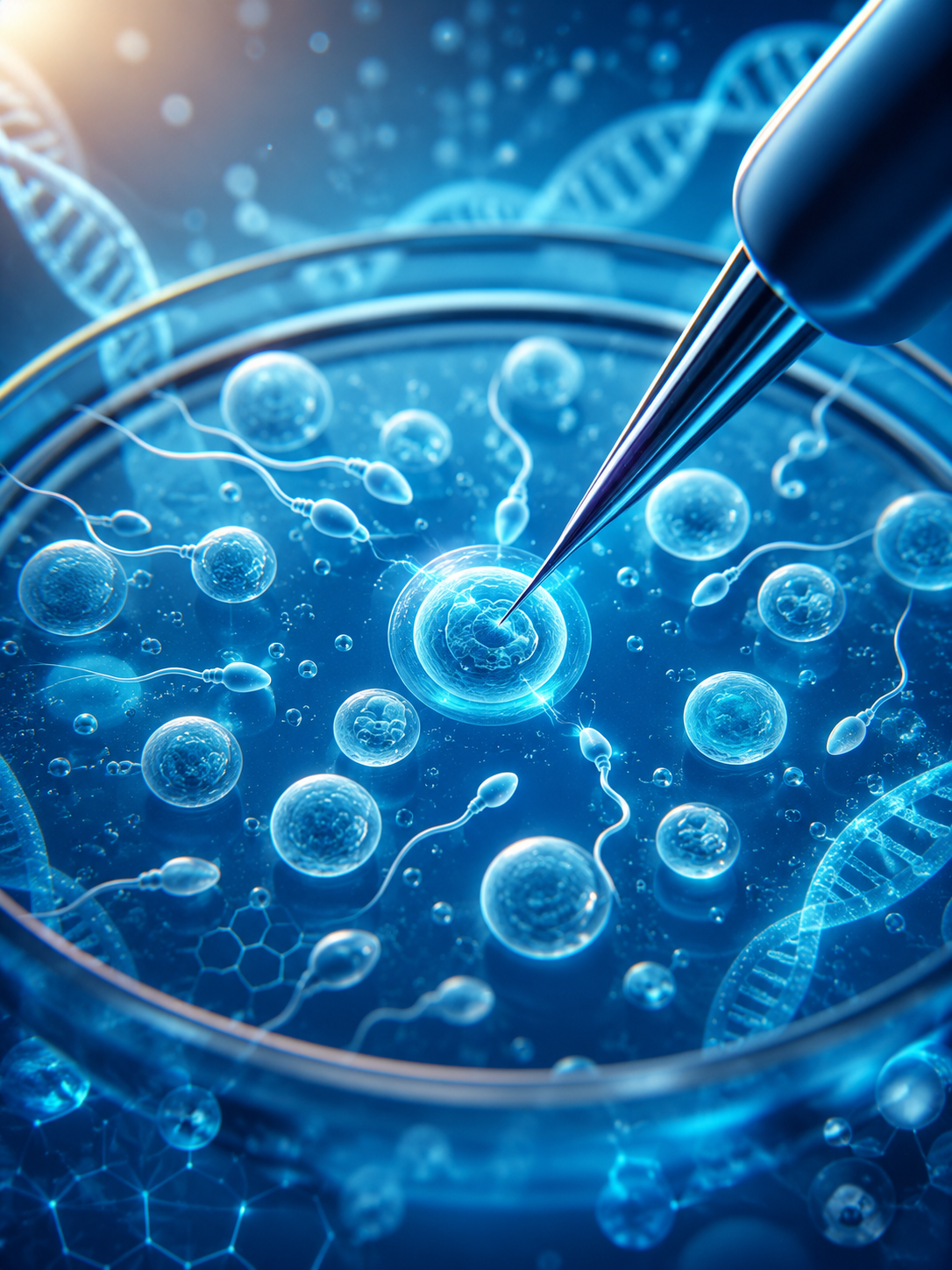
During the PICSI procedure, a sample of prepared sperm is placed onto a dish containing small droplets or a layer of hyaluronic acid hydrogel. The embryologist observes which sperm bind to this layer. Bound sperm are considered more likely to be mature and to carry lower levels of DNA fragmentation. The embryologist then carefully selects one of these bound sperm for use.
How Selected Sperm Are Used During ICSI
Once a suitable sperm has been identified through its binding behavior, it is gently released from the hyaluronic acid and immobilized. The embryologist then uses a fine glass needle to inject this single selected sperm directly into the cytoplasm of a mature egg, just as in conventional ICSI. From this point forward, the fertilization and embryo culture process proceeds in the same way as a standard IVF-ICSI cycle.
In summary, PICSI adds a natural, biology-based selection step before injection, aiming to reduce the chances of using sperm with DNA fragmentation or reduced developmental potential, while the rest of the IVF process remains unchanged.
Step-by-Step PICSI Procedure During IVF
Understanding how PICSI fits into the broader IVF journey can help ease some of the uncertainty around the process. Here is what the complete pathway typically looks like:
Initial Fertility Assessment
Before any treatment begins, both partners usually undergo a thorough fertility work-up. This may include hormone testing, ultrasound evaluation, and a detailed semen analysis. If there are indicators like poor embryo quality in a previous cycle, high sperm DNA fragmentation, or unexplained IVF failure, your specialist may discuss whether PICSI could be a useful addition.
Ovarian Stimulation
The female partner undergoes a course of hormonal injections over roughly 10–12 days to stimulate the ovaries to produce multiple mature eggs. This is monitored closely with blood tests and ultrasounds to track follicle growth.
Egg Retrieval
Once the eggs reach an appropriate size, a minor procedure under sedation is performed to retrieve them from the ovaries. This is a well-established, routine part of IVF.
Semen Preparation
On the same day, a semen sample is collected and processed in the lab to concentrate healthy, motile sperm and remove seminal fluid and debris.
PICSI Dish Preparation
The embryology team prepares a specialized culture dish containing hyaluronic acid, onto which the processed sperm sample is introduced.
Sperm Selection
The embryologist observes the sample and identifies sperm that bind naturally to the hyaluronic acid, indicating maturity and generally more favorable DNA integrity.
ICSI Fertilization
A selected, bound sperm is retrieved and injected directly into each mature egg using standard ICSI technique.
Embryo Culture
Fertilised eggs are cultured in the lab under carefully controlled conditions for several days, typically until they reach the blastocyst stage, while embryologists monitor their development.
Embryo Transfer
One healthy embryo (occasionally more, depending on individual circumstances and clinical guidance) is transferred into the uterus. Any additional suitable embryos may be frozen for future use.
Pregnancy Test
Around 10–14 days after the embryo transfer, a blood test is done to check for pregnancy. Your fertility team will guide you through this waiting period and the next steps, whatever the result.
Who Should Consider PICSI Treatment?
PICSI is not recommended as a routine, one-size-fits-all step in every IVF cycle. It tends to be most relevant for couples with specific risk factors, including:
- High sperm DNA fragmentation, identified through specialized DNA fragmentation testing
- Recurrent IVF or ICSI failure, where previous cycles did not result in pregnancy despite good-quality eggs
- Poor embryo quality in earlier IVF attempts, even when fertilization occurred normally
- Previous failed ICSI cycles with unexplained fertilization or development issues
- Male infertility factors, such as abnormal sperm morphology or low motility
- Older paternal age, which research suggests can be associated with increased DNA fragmentation
- Recurrent miscarriage, where sperm DNA quality is being investigated as a possible contributing factor
- Poor sperm morphology, where a large proportion of sperm show shape abnormalities on standard testing.
If any of these apply to your situation, it’s worth raising PICSI as a topic during your consultation so your specialist can assess whether it’s appropriate for your specific case.
Who May Not Need PICSI?
PICSI isn’t necessary for everyone undergoing IVF, and that’s an important point often left out of general information about the procedure.
Couples with good semen quality — normal sperm count, motility, morphology, and no known DNA fragmentation concerns — may not see any added benefit from PICSI, since conventional ICSI is already well-suited to their situation.
First-time IVF patients without identified risk factors are also often advised to proceed with standard ICSI, reserving PICSI as an option to consider if difficulties arise later.
Ultimately, fertility treatment works best when it’s individualized. Adding extra steps to a treatment plan isn’t automatically beneficial, and a good fertility specialist will help you understand whether PICSI is likely to add real value in your specific case, rather than recommending it by default.
PICSI vs ICSI: What’s the Difference?
| Aspect |
ICSI |
PICSI |
| Procedure |
Single sperm is injected directly into the egg |
Same injection process, with an added sperm selection step beforehand |
| Sperm Selection |
Based on visual assessment — shape and movement under a microscope |
Based on natural binding to hyaluronic acid, indicating maturity |
| Technology |
Standard high-magnification microscope |
Specialized PICSI dish coated with hyaluronic acid, plus a microscope |
| Benefits |
Well-established, effective for most male-factor infertility cases |
May further reduce the chance of selecting sperm with DNA fragmentation, in select cases |
| Success Rate |
Depends on multiple individual factors; well-documented track record |
May offer a modest benefit for specific patient groups; not universally superior |
| Cost |
Included in standard IVF-ICSI cycle pricing |
Usually involves an additional lab fee for the specialized dish and process |
| Recommended Patients |
Most couples undergoing IVF with a male-factor component |
Couples with high DNA fragmentation, recurrent failure, or specific risk factors |
PICSI vs IMSI vs Conventional ICSI
Understanding how these three techniques relate to one another can help clarify where PICSI fits within the broader landscape of advanced sperm selection.
| Aspect |
Conventional ICSI |
IMSI |
PICSI |
| Technology |
Standard inverted microscope |
Ultra-high-magnification microscope (typically 6,000x+) |
A hyaluronic acid-coated dish with a standard microscope |
| Magnification |
Around 200–400x |
Very high, showing detailed sperm structure |
Standard selection relies on biological binding |
| Selection Basis |
Visual shape and motility |
Detailed visual assessment of head structure and vacuoles |
Biological maturity, based on hyaluronic acid binding |
| Clinical Use |
First-line approach for most ICSI cycles |
Considered for severe morphology issues |
Considered for high DNA fragmentation or recurrent failure |
| Advantages |
Widely available, well-studied, cost-effective |
Detects fine structural abnormalities not visible at lower magnification |
Simulates a natural physiological selection checkpoint |
Each of these techniques offers a different lens — quite literally, in the case of IMSI — on how to identify the healthiest possible sperm. Your fertility specialist can advise which approach, if any beyond standard ICSI, makes sense based on your test results and treatment history.
Benefits of PICSI Treatment
Improved Sperm Selection
By selecting sperm based on a natural biological marker of maturity, rather than appearance alone, PICSI adds a layer of selection that more closely reflects the body’s own process.
Lower DNA Fragmentation Risk
Sperm that bind to hyaluronic acid tend, on average, to show lower rates of DNA fragmentation compared to unselected sperm, based on available research.
Better Embryo Quality
In couples with identified sperm DNA concerns, some studies have observed improvements in embryo quality when PICSI-selected sperm are used, though results vary between individuals and clinics.
Improved Fertilization Potential
Selecting mature sperm with intact receptors may support more consistent fertilization outcomes in specific patient groups.
Potential Reduction in Miscarriage Risk
Some research suggests a possible association between reduced sperm DNA fragmentation and lower miscarriage rates, though this remains an area of ongoing study rather than a guaranteed outcome.
May Improve IVF Success in Selected Couples
For couples with a clear history of DNA fragmentation issues or recurrent failure, PICSI may offer a meaningful benefit — but it is not expected to significantly change outcomes for couples without these specific risk factors.
Are There Any Risks or Limitations of PICSI?
It’s completely reasonable to want to understand the downsides before choosing any additional fertility procedure.
PICSI is considered a safe procedure. It doesn’t involve any additional physical intervention for the female partner and adds only a lab-based selection step to the existing ICSI process.
It doesn’t guarantee pregnancy. Like every fertility treatment, PICSI cannot promise a specific outcome. It is one tool among several that may modestly improve certain aspects of the IVF process for specific patients.
Outcomes still depend heavily on age. Both maternal and paternal age significantly influence IVF success, and PICSI cannot offset the effects of age-related decline in egg or sperm quality on its own.
Egg quality remains a major factor. Even with optimally selected sperm, an embryo’s development depends heavily on the quality of the egg being fertilized.
Uterine health matters just as much. Conditions affecting the uterine lining or overall reproductive health can influence implantation and pregnancy outcomes, independent of how the sperm was selected.
In short, PICSI is best understood as a refinement to one part of the IVF process, not a stand-alone solution to fertility challenges.
Does PICSI Improve IVF Success Rates?
This is one of the most common questions couples ask, and it deserves an honest, balanced answer.
What clinical studies suggest. Some clinical trials and reviews have found that PICSI may be associated with improved fertilisation rates, embryo quality, and reduced miscarriage risk in couples with high sperm DNA fragmentation. Other studies, particularly in unselected patient groups, have found no significant difference compared to conventional ICSI.
Who tends to benefit most? The couples most likely to see a meaningful benefit are those with a documented history of high sperm DNA fragmentation, recurrent implantation failure, or previous IVF cycles with poor embryo development despite normal fertilisation.
Success depends on multiple factors, not sperm selection alone. Maternal age, egg quality, embryo genetics, uterine receptivity, and overall reproductive health all play a role in whether an IVF cycle results in a successful pregnancy. PICSI addresses just one part of this larger picture.
We avoid guaranteed outcomes for a reason. No fertility clinic can honestly promise a specific success rate for an individual couple, since every case is different. What research does support is that, in the right circumstances, PICSI may offer a helpful additional layer of sperm selection — not a guaranteed path to pregnancy.
Clinical Evidence: What Research Says About PICSI
Professional fertility bodies and researchers have studied PICSI over the years, and it’s worth understanding what the current evidence actually shows.
Guidance from professional bodies. Organisations such as the European Society of Human Reproduction and Embryology (ESHRE) and the American Society for Reproductive Medicine (ASRM) have reviewed evidence on advanced sperm selection techniques, including PICSI. Their general position has been that while some studies show potential benefits for specific patient groups, the overall evidence is not yet strong or consistent enough to recommend PICSI as a routine step for all IVF-ICSI cycles.
What the research summary looks like. Systematic reviews and randomized trials on PICSI have produced mixed results. Several studies point to reduced sperm DNA fragmentation and, in some cases, lower miscarriage rates among couples with elevated DNA fragmentation at baseline. Other trials involving broader, unselected populations have not found statistically significant improvements in live birth rates.
A balanced conclusion. The most reasonable interpretation of the current evidence is that PICSI appears to offer selective benefit for couples with specific sperm-related concerns, rather than universal benefit for everyone undergoing IVF. This is precisely why individualized assessment by a fertility specialist matters more than following a blanket recommendation. No responsible clinic should present PICSI as guaranteed to improve outcomes for any given couple.
PICSI Treatment Cost: What Influences the Price?
The cost of PICSI varies from clinic to clinic and depends on several factors:
- The overall IVF package you’ve chosen, since PICSI is typically an add-on to an existing ICSI cycle rather than a stand-alone treatment
- The laboratory and equipment used, as specialized PICSI dishes and embryology expertise contribute to the cost
- Whether advanced sperm selection is bundled or charged separately, which varies between clinics
- Your location, since treatment costs can differ across cities and states
- Your individual treatment plan, including whether additional tests like DNA fragmentation analysis are also required.
Because pricing depends on so many variables, it’s best to ask your clinic for a personalized cost estimate based on your specific treatment plan, rather than relying on a fixed number you may see online.
Preparing for PICSI Treatment
While PICSI itself is a lab-based procedure, there’s a lot the male partner can do beforehand to support overall sperm health going into the cycle.
Lifestyle Improvements
Regular moderate exercise, adequate sleep, and stress management can all play a supportive role in sperm health over the 2–3 month window before treatment, which roughly matches the sperm production cycle.
Nutrition
A balanced diet rich in antioxidants — think fruits, vegetables, nuts, and whole grains — is generally recommended to support sperm quality. Your specialist may suggest specific dietary adjustments based on your test results.
Avoid Smoking
Smoking has been consistently linked to increased sperm DNA fragmentation and reduced sperm quality. Cutting back or quitting well before treatment can be genuinely beneficial.
Supplements
Some fertility specialists recommend specific antioxidant supplements to support sperm health, but this should always be discussed with your doctor first, since not all supplements are appropriate for every individual.
Follow the Fertility Specialist Advice
Every couple’s situation is different, and your specialist may have specific recommendations based on your semen analysis, DNA fragmentation results, and overall health history. Following this personalised guidance matters more than generic advice found online.
Questions to Ask Your Fertility Specialist Before Choosing PICSI
Walking into a consultation with clear questions can make the conversation feel less overwhelming and more productive. Consider asking:
- Am I (or is my partner) a good candidate for PICSI, based on our specific test results?
- Is sperm DNA fragmentation testing recommended before deciding on PICSI?
- Based on our history, is PICSI actually likely to help, or would standard ICSI be just as effective?
- What outcomes can we realistically expect, and how will we know if it’s working?
- Is there an additional cost involved, and what does it cover?
- Are there alternative techniques, like IMSI, that might be more suitable for our situation?
A good fertility specialist will welcome these questions and walk you through the reasoning behind their recommendation, rather than presenting PICSI as a mandatory step.
Why Choose Nimaaya for PICSI Treatment?
At Nimaaya IVF, with centres in Surat, Vadodara, and Ahmedabad, treatment decisions are built around each couple’s individual diagnostic picture rather than a standard protocol applied to everyone. Our fertility specialists assess sperm quality, DNA fragmentation, and previous treatment history carefully before discussing whether an advanced technique like PICSI is likely to add genuine value to your cycle.
Our embryology lab is equipped to perform advanced sperm selection procedures with the precision they require, and our team believes in transparent counselling — explaining not just what a technique does, but honestly discussing when it is, and isn’t, likely to help. We see fertility care as a partnership, where every recommendation is explained clearly so you can make informed decisions alongside your doctor.
If you’re exploring whether PICSI might be relevant to your IVF journey, we’re glad to sit down with you, review your reports, and talk through the options with the care and clarity this decision deserves.
Conclusion
PICSI is a thoughtful, biology-based refinement to sperm selection during IVF-ICSI, designed to identify sperm that more closely resemble what the body would naturally select during conception. It isn’t a treatment every couple needs, and it certainly isn’t a guarantee of pregnancy — but for couples dealing with high sperm DNA fragmentation, recurrent IVF failure, or unexplained poor embryo quality, it can be a valuable, evidence-informed option worth discussing.
The most important step isn’t deciding on PICSI itself — it’s having an open, detailed conversation with your fertility specialist about your specific test results and history. Personalized fertility care, built around your unique situation rather than a one-size-fits-all protocol, remains the most reliable path forward. If you think PICSI might be relevant to your journey, we’d encourage you to bring your questions to your next consultation.
Frequently Asked Questions
What is PICSI in IVF?
PICSI, or Physiological Intracytoplasmic Sperm Injection, is an advanced form of ICSI where sperm are selected based on their natural ability to bind to hyaluronic acid, a marker of maturity, before being injected into the egg.
Is PICSI better than conventional ICSI?
Not universally. PICSI may offer added benefit for couples with specific risk factors like high DNA fragmentation, but for couples without these concerns, conventional ICSI is generally just as effective.
Does PICSI improve embryo quality?
In some studies involving couples with elevated sperm DNA fragmentation, PICSI has been associated with improved embryo quality. Results vary between individuals, so it isn’t a guaranteed outcome.
Can PICSI reduce DNA fragmentation?
PICSI doesn’t repair DNA damage, but it helps select sperm that are more likely to already have lower DNA fragmentation, based on their maturity.
Is PICSI painful?
No. PICSI is a lab-based sperm selection technique performed on the semen sample. It doesn’t involve any additional procedure for either partner beyond standard ICSI.
Is PICSI safe?
Yes, PICSI is considered a safe, well-established laboratory technique with no known additional risks to the embryo or the patients involved.
Who should undergo PICSI?
Couples with high sperm DNA fragmentation, recurrent IVF or ICSI failure, poor embryo quality in previous cycles, or specific male infertility factors may be advised to consider PICSI.
Does every IVF patient require PICSI?
No. Couples with normal semen parameters and no history of IVF difficulties often don’t need PICSI, and standard ICSI works well for them.
What is the success rate of PICSI?
Success rates vary widely depending on individual factors like age, egg quality, and underlying fertility diagnosis. PICSI may offer a modest improvement for specific patient groups, but no fixed success rate applies to every couple.
Can PICSI reduce miscarriage risk?
Some research suggests a possible link between lower sperm DNA fragmentation and reduced miscarriage risk, but this remains an area of ongoing study rather than a guaranteed benefit.
How long does the PICSI procedure take?
The sperm selection step itself typically takes a short additional time within the lab process on the day of egg retrieval and doesn’t add meaningfully to the overall IVF cycle timeline.
Does PICSI increase fertilization rates?
In some studies, particularly among couples with sperm DNA concerns, PICSI has been associated with improved fertilization rates, though this isn’t consistent across all research.
What is the difference between PICSI and IMSI?
PICSI selects sperm based on biological binding to hyaluronic acid, while IMSI uses ultra-highmagnification microscopy to visually assess sperm structure in detail. Both aim to improve sperm selection but use different methods.
Is PICSI recommended after failed IVF?
It may be considered, particularly if DNA fragmentation testing or other assessments suggest sperm quality could have contributed to the earlier outcome. This should be discussed individually with your specialist.
Can PICSI help with recurrent implantation failure?
For some couples, sperm DNA fragmentation is investigated as a contributing factor in recurrent implantation failure, and PICSI may be considered as part of a broader evaluation and treatment plan.
Does paternal age affect PICSI outcomes?
Paternal age can be associated with increased sperm DNA fragmentation, which is one of the factors PICSI aims to address through more careful sperm selection.
How much does PICSI treatment cost?
Cost varies by clinic, location, and whether it’s bundled into your IVF package. It’s best to request a personalized estimate from your fertility clinic.
Can PICSI be combined with genetic testing (PGT)?
Yes, PICSI and preimplantation genetic testing address different aspects of embryo quality and can be used together as part of a broader individualized treatment plan, if recommended by your specialist.
Is PICSI available at all IVF centres?
No, PICSI requires specialized dishes and trained embryology staff, so it’s typically offered at fertility centres with advanced embryology capabilities.
How do doctors decide whether PICSI is right for me?
Your fertility specialist will typically review your semen analysis, any DNA fragmentation testing, and your treatment history before recommending whether PICSI is likely to add value to your specific cycle.
For couples exploring advanced infertility solutions, Nimaaya offers expert-guided PICSI treatment in Surat, Vadodara, and Ahmedabad. With experienced fertility specialists, advanced embryology support, and personalised treatment planning, we help couples make informed decisions and take a confident step towards their dream of starting a family.