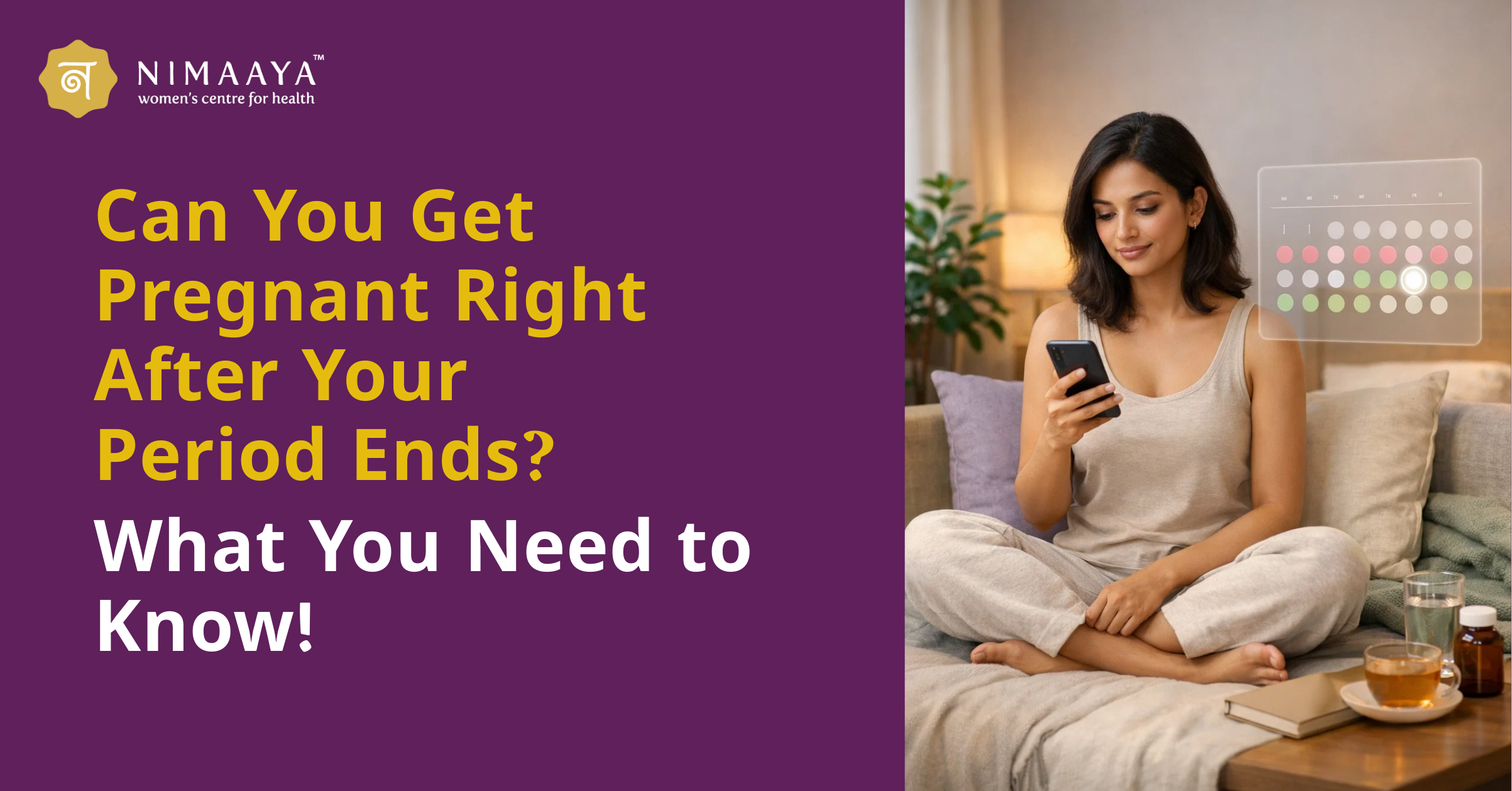
Many women and couples wonder about pregnancy right after periods—especially when periods have just ended, and unprotected sex has occurred. It’s a common question that often brings confusion, anxiety, or even guilt, particularly when online information gives mixed or misleading answers.
The truth is, yes, pregnancy after period is possible, but it doesn’t happen the same way for everyone. Your menstrual cycle length, ovulation timing, and even sperm survival inside the body all play an important role. This is why some women get pregnant shortly after their period ends, while others may not.
Understanding the chances of pregnancy after period helps you make informed decisions—whether you are actively trying to conceive or hoping to avoid an unplanned pregnancy. Instead of relying on myths like “after period sex is safe,” it’s important to understand how your body actually works.
In this article, we’ll explain how many days after your period you can get pregnant, what really happens inside your body after menstruation, and when pregnancy risk is higher or lower. Our aim is to offer clear, medically accurate, and reassuring guidance—so you can feel confident and informed about your fertility choices.
Why Understanding Fertility After Periods Matters
Confusion and anxiety around pregnancy timing are very common, especially when it comes to pregnancy right after period. Many women grow up hearing that once their periods end, the “safe days” begin. So when pregnancy happens unexpectedly, it can feel shocking, stressful, or even hard to believe.
The idea that periods automatically protect against pregnancy is one of the most widespread misconceptions. While the chances may be lower for some women, it is possible to be pregnant after period, depending on how your body’s cycle works that month. Fertility is not fixed or predictable in the same way for everyone.
Ovulation does not always follow a strict schedule. Stress, travel, illness, hormonal changes, or naturally shorter cycles can shift ovulation earlier than expected. This means that fertility can return sooner—even when bleeding has just stopped.
Understanding how your fertility behaves after periods helps reduce fear and misinformation. Whether you are trying to conceive or hoping to avoid pregnancy, knowing that fertility varies from cycle to cycle allows you to make calm, informed, and confident decisions about your reproductive health.
Read also: प्रेगनेंसी में कितने समय के बाद सम्बन्ध बनाना बंद कर देना चाहिए?
Understanding the Menstrual Cycle
To understand pregnancy after period, it is important to first know how the menstrual cycle works. The menstrual cycle is the body’s natural monthly process for preparing for pregnancy, and it can vary significantly from woman to woman. Tracking it accurately not only helps identify fertile days but also provides valuable insights into overall reproductive health.
What Happens During Each Phase of the Cycle
Menstrual Phase
This is the period itself, when the uterine lining sheds, resulting in bleeding that typically lasts 3–7 days. Many women assume pregnancy is impossible during menstruation, but while the likelihood is lower, it is not zero—especially for women with shorter cycles where ovulation may occur earlier than expected.
Follicular Phase
After your period ends, the body begins preparing an egg for release. Follicle-stimulating hormone (FSH) stimulates the ovaries, and the uterine lining starts rebuilding. Fertility gradually rises during this phase, depending on individual cycle length. Women with shorter cycles may become fertile very soon after menstruation, while those with longer cycles experience a more gradual increase in fertility.
Ovulation
Ovulation is the release of a mature egg from the ovary, typically occurring around mid-cycle. This is the most fertile period of the month. However, the exact timing of ovulation varies, influenced by stress, illness, hormonal changes, travel, or naturally shorter cycles. For some women, ovulation can happen just a few days after the period ends, explaining why conception immediately post-period is possible.
Luteal Phase
Following ovulation, the body produces progesterone to prepare for a potential pregnancy. If the egg is not fertilized, hormone levels drop, triggering the next menstrual period. Understanding this phase helps women anticipate the transition from fertility to menstruation and recognize the timing for conception attempts.
How Cycle Length Affects Fertility Timing
Short vs. Long Cycles
- Short cycles (21–25 days): Fertile window may start soon after menstruation, increasing the likelihood of pregnancy immediately post-period.
- Long cycles (30+ days): Ovulation occurs later, reducing fertility right after menstruation but extending the fertile window mid-cycle.
Why Ovulation Isn’t Always Day 14
The common “day 14 ovulation” rule is only a general guideline. Every woman’s cycle is unique, and ovulation can shift month to month due to stress, illness, or hormonal variations.
Why Calendar Assumptions Fail
Relying solely on the calendar to predict “safe days” can be misleading. Fertility may return earlier than expected, and conception can occur sooner than assumed. Observing personal fertility signs—like cervical mucus, ovulation pain, or basal body temperature—provides a more reliable method to understand fertile windows and plan pregnancy or contraception effectively.
Read More: प्रजनन क्षमता बढ़ाने के प्राकृतिक एवं घरेलू उपाय: पुरुषों और महिलाओं के लिए संपूर्ण गाइड
What Is the Fertile Window and Why It’s Important
Even after your period ends, understanding your fertile window is key to knowing your chances of conceiving. The fertile window refers to the days in your cycle when pregnancy is most likely to occur—usually a few days before and the day of ovulation. Knowing this helps women and couples make informed decisions, whether trying to conceive or avoid pregnancy.
How Long Sperm Can Live Inside the Body
Sperm can survive inside a woman’s reproductive tract for up to five days. This means that even sex early in your cycle—just after your period ends—can lead to conception if ovulation happens sooner than expected. In short, early-cycle sex is not automatically “safe,” and fertility can overlap with the final days of menstruation in some women.
Ovulation Timing Explained Clearly
Ovulation is not fixed; it can shift month to month depending on your body’s signals and circumstances. Stress, illness, hormonal fluctuations, or travel can all affect when ovulation occurs. This variability is why the chances of pregnancy after period differ among women, and why some women may get pregnant just a few days after menstruation ends.
Tracking your ovulation signs, or using methods like ovulation predictor kits, can help couples better understand getting pregnant after period and plan sexual activity around their most fertile days.
Can You Get Pregnant Right After Your Period Ends?
Many women and couples often wonder whether it’s possible to conceive immediately after menstruation. The short answer is yes, pregnancy after your period is possible, though the likelihood depends on several biological factors such as cycle length, ovulation timing, and sperm survival. Understanding these nuances can help you plan or prevent pregnancy more effectively while avoiding myths or fear-based assumptions.
Can I Get Pregnant 1 Day After My Period?
For women with short menstrual cycles (around 21–25 days), ovulation can occur soon after the period ends. Because sperm can survive up to 5 days in the reproductive tract, intercourse just one day after menstruation may result in sperm meeting an egg if ovulation happens early.
While the probability is generally lower than during the mid-cycle fertile window, it is not zero. This explains why some women conceive very early in their cycle, and why assumptions like “post-period sex is always safe” can be misleading.
Factors that increase early conception risk include:
- Short or irregular cycles, which shift ovulation forward
- Hormonal fluctuations, influenced by stress, illness, or lifestyle
- Early follicular phase ovulation, which is normal in some women
By understanding these dynamics, couples can make informed decisions about timing intercourse and reduce unnecessary anxiety.
Can I Get Pregnant 2 Days After My Period?
Two days after menstruation, conception is also medically possible under similar circumstances:
- Early ovulation: Some women release an egg shortly after bleeding ends.
- Sperm longevity: Sperm from intercourse two days after periods may still survive to fertilize the egg.
- Cycle irregularities or stress: Physical or emotional factors can shift ovulation forward unexpectedly.
Medically, this shows that pregnancy can occur very soon after menstruation, even though the risk is lower compared to peak fertile days. Awareness of your personal cycle length, ovulation patterns, and fertility signs can help you plan intercourse more effectively—whether you are trying to conceive or avoid pregnancy.
- Pregnancy immediately after periods is possible but less likely than mid-cycle conception.
- Cycle tracking and ovulation awareness are essential for informed family planning.
Read Also: गर्भावस्था में बारिश में संक्रमण से बचाव के आसान टिप्स
Pregnancy During or Around Periods – Common Concerns Explained
Many women and couples have questions about the possibility of pregnancy and the safety of sexual activity during menstruation. These concerns are completely normal, and understanding the science behind menstrual cycles, ovulation, and fertility can help reduce anxiety while providing clear guidance.
Can You Get Pregnant on Your Period?
Although conceiving during menstruation is generally low, it is not impossible. The chance of pregnancy depends on factors such as cycle length, ovulation timing, and sperm survival:
- End of the period: For women with short or irregular cycles, ovulation may occur sooner than expected. In such cases, sperm from intercourse toward the end of menstruation can survive long enough to fertilize an early-released egg.
- Sperm longevity: Healthy sperm can survive in the reproductive tract for up to 5 days, meaning that even sex during menstruation can result in pregnancy if ovulation happens early.
- Cycle variability: Factors such as stress, hormonal fluctuations, illness, or travel can shift ovulation timing, further increasing the chance of conception even during or immediately after periods.
Understanding this helps women and couples see that pregnancy during menstruation, while uncommon, is a real possibility and should be considered when planning or preventing pregnancy.
Is It Safe to Have Sex During Periods?
For most women, sexual activity during menstruation is physically safe, but a few considerations can help make it comfortable and reduce risks:
- Hygiene considerations: Using protection or taking extra care with cleanliness can help manage menstrual flow and reduce discomfort.
- STI risk: Menstrual blood can slightly increase the risk of transmitting infections. Using condoms or other protection is advisable, especially if there are any concerns about sexually transmitted infections.
- Pregnancy risk: Although lower than at peak fertility, there is still a chance of pregnancy, particularly if ovulation occurs early in short or irregular cycles. Awareness of cycle patterns and fertility signs remains important.
- Fertility is dynamic and individualized, so assumptions about “safe days” based solely on the calendar can be misleading.
- Tracking your fertile signs—including cervical mucus, basal body temperature, and ovulation pain—can help identify higher-risk days even during menstruation.
Read Also : Natural Ways to Control Thyroid During Pregnancy
Is After-Period Sex Always Safe?
Many women and couples believe that having sex immediately after menstruation is completely safe from the risk of pregnancy. While the likelihood of conception is generally lower during this time, it is not zero. Understanding the science behind fertility, ovulation, and sperm survival helps clear misconceptions, reduce anxiety, and allow couples to make informed choices about family planning.
Why “After-Period Sex Is Safe” Is a Common Myth
The belief that post-period sex is safe often comes from simplified calendar assumptions:
- Many assume ovulation always happens on day 14, mid-cycle, and that pregnancy is impossible outside the “fertile window.”
- Menstrual cycles are often irregular or shorter than 28 days, which can shift ovulation earlier.
- Couples may rely solely on dates rather than biological signs, such as cervical mucus or basal body temperature, to determine fertile days.
In reality, fertility varies from woman to woman, and even small variations in cycle length or ovulation timing can create unexpected fertile windows. This explains why some women conceive soon after their periods, despite the common belief that it’s “safe.”
When After-Period Sex Can Lead to Pregnancy
Several biological factors contribute to the possibility of conception after menstruation:
- Early Ovulation: Some women, particularly those with short cycles (21–25 days), may ovulate just a few days after their period ends. In such cases, intercourse during the post-period days can coincide with the fertile window.
- Sperm Longevity: Healthy sperm can survive in the female reproductive tract for up to 5 days, waiting for the egg to be released. This means sex even a few days after menstruation can result in fertilization if ovulation occurs early.
- Hormonal Fluctuations and Irregular Cycles: Stress, illness, travel, or hormonal changes can shift ovulation timing unexpectedly, increasing the chance of conception from post-period intercourse.
- Understand your cycle: Don’t rely solely on calendars. Track your cycle length and fertile signs for more accurate planning.
- Monitor fertility signals: Observing cervical mucus, ovulation pain, and basal body temperature can help identify your personal fertile window.
- Low but non-zero risk: While the probability of conception immediately after periods is generally lower, it is not impossible. Planning and awareness are key to avoiding surprises.
By combining fertility awareness with careful monitoring, women and couples can approach post-period intimacy confidently, with an accurate understanding of when conception is possible and when it is less likely.
How Many Days After Your Period Can You Get Pregnant?
Understanding the timing of fertility after your period is essential for both planning and preventing pregnancy. While many people assume there is a “safe” window immediately after menstruation, fertility is highly individualized and depends on several factors, including cycle length, ovulation timing, sperm survival, and hormonal fluctuations. By understanding these dynamics, women and couples can approach conception in a more informed and confident way.
Typical Fertile Days After Period Ends
For women with an average 28-day menstrual cycle, ovulation usually occurs around day 14, and fertility peaks during this mid-cycle window. This means that the fertile days typically begin around day 10–14, when the egg is released and ready for fertilization. However, not all cycles follow this textbook pattern, so fertility timing can vary significantly:
- Short cycles (21–25 days): Ovulation may occur sooner, around day 7–9. In these cases, conception can happen just a few days after the period ends, making early post-period intercourse potentially fertile.
- Long cycles (30+ days): Ovulation is often delayed, with fertile days beginning closer to day 14–16. Here, the chance of pregnancy immediately after menstruation is lower, but still possible in some scenarios.
It’s important to remember that these ranges are estimates. Each woman’s cycle can differ month to month, influenced by stress, illness, hormonal changes, and lifestyle factors.
Why Fertility Can Start Earlier Than Expected
Even immediately after menstruation, pregnancy is possible due to a combination of factors:
- Sperm Longevity: Healthy sperm can survive in the reproductive tract for up to 5 days. Intercourse right after your period may allow sperm to be present when ovulation occurs earlier than expected.
- Early Ovulation: Some women naturally ovulate soon after menstruation ends. For those with short or irregular cycles, ovulation may overlap with the post-period days, creating a fertile window sooner than the mid-cycle norm.
- Cycle Variability: Factors such as stress, travel, illness, or hormonal fluctuations can shift ovulation timing. This means even if your previous cycle had ovulation mid-cycle, this month it might occur earlier.
Understanding these dynamics helps explain why couples sometimes conceive right after the period ends, even though general assumptions suggest a lower probability.
Tips to Estimate Your Personal Fertile Window
- Track your cycles: Keep a diary of your menstruation dates and ovulation signs over several months.
- Observe fertile signs: Monitor cervical mucus, ovulation pain, and basal body temperature to get a real-time understanding of fertility.
- Use ovulation predictor kits (OPKs): These tests detect hormonal surges and can indicate your most fertile days.
- Consult a fertility specialist: If cycles are irregular or conception is taking longer than expected, a healthcare provider like Nimaaya IVF Center in Surat can provide personalized guidance and strategies to maximize your chances of pregnancy.
Identifying Fertile Signs in Your Body
Understanding your body’s natural fertility signals is a key step in planning pregnancy and improving awareness of your most fertile days. While calendar methods can provide general guidance, observing real-time biological signs gives a more accurate picture of when conception is most likely. Paying attention to these signs helps couples time intercourse effectively and also reduces unnecessary stress or misconceptions about fertility.
Cervical Mucus Changes
Cervical mucus is one of the most reliable natural indicators of fertility. During most of the menstrual cycle, mucus may be minimal, thick, or sticky. However, as ovulation approaches, it changes dramatically:
- Appearance: Clear, watery, and slippery, often compared to raw egg whites.
- Function: This fertile-quality mucus nourishes sperm and helps it travel efficiently through the cervix toward the egg.
- Observation tips: Monitor changes daily by wiping with toilet paper or checking during gentle finger checks. Recording observations in a fertility journal or app helps detect patterns over multiple cycles.
Even if your cycles vary from month to month, cervical mucus changes remain a consistent and real-time indicator of your fertile window. Combining mucus observations with other fertility signs improves prediction accuracy.
Ovulation Pain or Mild Cramps
Many women experience mittelschmerz, a German term for ovulation-related twinges or cramps, during the release of an egg:
- Location: Usually one-sided in the lower abdomen, alternating sides each cycle.
- Sensation: Light, brief twinges or dull cramps that can last from a few minutes to several hours.
- Why it matters: Tracking ovulation pain provides an additional cue to identify peak fertility days. While not every woman experiences this, those who do can use it alongside other signs to time intercourse strategically.
Recognizing these subtle body signals allows couples to focus on the days when conception is most likely, without relying solely on calendar calculations.
Basal Body Temperature (BBT)
Basal body temperature (BBT) is the body’s resting temperature measured immediately upon waking, before any activity:
- Post-ovulation rise: After ovulation, progesterone causes a slight temperature increase, usually 0.3–0.5°C (0.5–1°F).
- Tracking method: Take your temperature at the same time every morning using a basal thermometer and record it consistently.
- Pattern recognition: Over multiple cycles, BBT charts reveal when ovulation occurred and can help predict future fertile windows.
BBT tracking works best when combined with cervical mucus observations and awareness of ovulation pain, creating a multi-faceted approach to fertility monitoring. This combination helps couples time intercourse more effectively and reduces uncertainty about conception chances.
Additional Tips for Accurate Fertility Awareness
- Consistency is key: Track your signs daily to notice patterns across cycles.
- Lifestyle factors matter: Stress, illness, sleep disturbances, and travel can temporarily affect fertile signs. Keep notes to identify deviations.
- Combine methods for precision: Using cervical mucus, BBT, and fertility apps together improves accuracy far beyond relying on any single method.
By carefully observing these natural signals, women and couples can gain greater control over conception planning, better understand their bodies, and approach fertility in a calm, informed, and proactive way.
Best Time for Sex to Get Pregnant After Periods
Timing intercourse effectively after your period can significantly improve your chances of conception. While many women assume there is a “safe” window right after menstruation, fertility is highly individual and depends on cycle length, ovulation timing, and sperm survival. Understanding these factors helps couples plan sex strategically, without stress or misinformation.
Sex for Pregnancy After Periods – What Works Best
The most fertile period usually occurs during ovulation, which generally happens around the middle of the cycle. However, women with short cycles (21–25 days) may ovulate soon after their period ends, making early-cycle sex more likely to result in pregnancy. Key considerations include:
- Frequency during the fertile window: Sperm can survive inside the reproductive tract for up to 5 days, so having sex 2–3 times in the days leading up to ovulation can maximize conception chances.
- Timing relative to ovulation: Intercourse on the day of ovulation or the day before gives the highest likelihood of fertilization.
- Understanding personal cycle patterns: Tracking ovulation through cervical mucus, basal body temperature, or ovulation predictor kits can identify the exact fertile days more accurately than calendar estimates.
How Often Should Couples Try?
There is no single “magic number,” but research and fertility specialists recommend:
- Every 2–3 days during the fertile period: This ensures fresh sperm is available when the egg is released.
- Avoid over-focusing or stress-inducing schedules: Stress can impact fertility, so maintain a relaxed and natural approach to intimacy.
- Consistency over intensity: Regular, spaced-out intercourse is more effective than concentrated efforts on only one or two days.
Additional Tips for Post-Period Fertility
- Monitor your body’s fertile signs: Changes in cervical mucus, ovulation pain, and basal body temperature provide natural cues about peak fertility.
- Healthy lifestyle habits: Adequate sleep, balanced nutrition, moderate exercise, and stress management all support optimal reproductive health.
By understanding your fertile window after menstruation and approaching conception in a calm, informed way, couples can improve their chances of pregnancy while maintaining a healthy and stress-free relationship.
How to Track Ovulation Accurately
Tracking ovulation is one of the most reliable ways to understand your fertility and plan for pregnancy. While many women rely on calendar dates alone, combining observational methods, tools, and technology can help you identify your fertile window more precisely. Accurate tracking can also reduce stress and improve your chances of conceiving naturally.
Ovulation Tracking Methods
Calendar Method
The calendar method involves tracking your menstrual cycle length and predicting ovulation based on averages. For example, in a typical 28-day cycle, ovulation usually occurs around day 14.
However, cycles vary from month to month, and factors like stress, illness, or hormonal changes can shift ovulation. This method is most useful for women with regular cycles, but it should be combined with other indicators for more accuracy.
Ovulation Predictor Kits (OPKs)
Ovulation predictor kits detect hormonal surges (usually luteinizing hormone) that occur 24–48 hours before ovulation. Using an OPK can help women identify the most fertile days in real time.
Tips for using OPKs effectively:
- Test at the same time each day.
- Limit fluid intake before testing to avoid diluting urine.
- Begin testing a few days before the expected fertile window.
OPKs are particularly helpful for women with irregular cycles or those who want to maximize their chances of conception without guesswork.
Apps and Charts
Digital fertility apps allow you to log menstrual cycles, basal body temperature, cervical mucus observations, and ovulation test results. These apps use algorithms to estimate fertile windows and help couples track patterns over time.
Charts, whether digital or paper-based, help visualize:
- Ovulation timing over multiple cycles
- Patterns in cervical mucus changes
- Basal body temperature shifts
Combining charting with apps provides a holistic view of your fertility and supports informed planning.
Can Ovulation Tracking Be Used as Birth Control?
While ovulation tracking can indicate fertile days, it cannot be relied upon as a sole contraceptive method. Fertility can vary from cycle to cycle, and ovulation can occur earlier or later than predicted.
Important considerations:
- Fertility signs (cervical mucus, BBT) are retrospective—they indicate ovulation may have already occurred.
- Sperm can survive up to 5 days in the reproductive tract, meaning intercourse before predicted ovulation may still result in pregnancy.
- Calendar or app predictions alone are not sufficient for preventing pregnancy in couples not planning to conceive.
In short, ovulation tracking is excellent for planning conception, but it should not replace medically approved contraception for pregnancy prevention.
By understanding and tracking ovulation, couples can approach conception with confidence, reduce uncertainty, and make informed decisions about timing intercourse. This knowledge also helps women recognize natural fertility patterns, increasing self-awareness and empowering them in their reproductive health journey.
Real-Life Scenario – “I Got Pregnant Right After My Period Ended”
Many women and couples are surprised to discover they’ve conceived immediately after a period, and it can raise a lot of questions, doubts, and even anxiety. Understanding why this happens and how common it is can reassure women and help them approach fertility planning with clarity and confidence.
I Got Pregnant Right After My Period Ended — Is It Common?
Yes, it is medically possible to get pregnant right after your period ends. While most people associate ovulation with the middle of the cycle, fertility can vary significantly from woman to woman and from month to month. Factors such as shorter cycles, irregular cycles, hormonal fluctuations, stress, or illness can cause ovulation to occur earlier than the typical mid-cycle timing.
Because sperm can survive in the female reproductive tract for up to 5 days, intercourse just a day or two after menstruation may lead to fertilization if ovulation happens early. This means that even though the chance is lower compared to mid-cycle, conception immediately after a period is biologically plausible and happens naturally for many couples.
It’s important to remember that this is normal biology and not an indication of a problem. Early-cycle conception is simply a reflection of individual variations in menstrual cycles, and it does not signal fertility issues. Couples who experience this should be reassured that their reproductive system is functioning naturally.
Why This Happens
- Early Ovulation: In women with short cycles (e.g., 21–25 days), ovulation can occur just a few days after menstruation ends.
- Sperm Longevity: Healthy sperm can survive up to 5 days inside the reproductive tract, waiting for the egg to be released.
- Cycle Variability: Every cycle can be slightly different; ovulation does not always occur on the same day each month.
- Hormonal Factors: Stress, diet, or mild illness can shift ovulation earlier or later than expected.
This combination explains why many women conceive shortly after their period, even if they thought they were “safe” from pregnancy during that time.
Reassurance for Women and Couples
Experiencing pregnancy right after a period is common enough to be considered normal, and it highlights the importance of understanding your personal cycle rather than relying solely on assumptions or calendar-based methods. Couples trying to conceive can use this knowledge to better time intercourse for pregnancy, while those avoiding pregnancy should be aware that fertility can return sooner than expected.
By learning how ovulation, sperm survival, and cycle variability interact, women can approach fertility with confidence, clarity, and reduced anxiety. If there are concerns about unusual cycles, fertility, or conception timing, consulting a trusted healthcare provider like Nimaaya can provide individualized guidance, reassurance, and support for informed reproductive decisions.
When Should You See a Doctor?
While most variations in menstrual cycles and fertility are completely normal, there are times when consulting a healthcare professional can provide clarity, reassurance, and timely intervention. Knowing when to seek medical advice helps women and couples make informed decisions, reduce anxiety, and optimize chances of conception.
Irregular Cycles
Women with irregular or unpredictable menstrual cycles may find it difficult to determine their fertile window. Irregularity can result from:
- Hormonal imbalances (thyroid issues, polycystic ovary syndrome – PCOS)
- Stress, extreme physical activity, or sudden weight changes
- Chronic illness or medications
If your periods vary widely in length or sometimes skip entirely, a doctor can help identify the underlying cause, assess fertility health, and suggest ways to better predict ovulation for conception.
Difficulty Conceiving
Couples trying to get pregnant without success after 6–12 months of regular, unprotected intercourse should consider consulting a doctor. This applies especially to women over 35, where age-related fertility changes can occur more rapidly. A fertility evaluation can:
- Identify ovulation problems
- Assess sperm quality and reproductive health of the partner
- Provide guidance on timing intercourse or using ovulation aids
Early consultation increases the chances of successful conception and helps prevent unnecessary stress or delays.
Repeated Anxiety About Pregnancy Timing
Even if cycles are regular, some women experience persistent worry about whether they are fertile at the “right time.” Excessive stress can itself affect ovulation and fertility. Consulting a doctor or fertility specialist can:
- Provide personalized reassurance about fertile days
- Offer strategies for accurate ovulation tracking
- Address concerns about early pregnancy or timing of conception
Planning Pregnancy After Miscarriage
For women who have experienced a miscarriage, careful planning is essential. A doctor can help:
- Determine the optimal time to try again
- Evaluate reproductive health to prevent future complications
- Provide emotional support and guidance for safe conception
Seeing a doctor is not a sign of failure—it is a proactive step toward understanding your body, managing fertility health, and making pregnancy planning safer and more informed. Trusted healthcare providers, such as Nimaaya IVF Center in Ahmedabad, offer guidance, evaluation, and support for women and couples at every stage of reproductive planning.
How Fertility Specialists Can Help
When trying to conceive, it’s common to have questions, concerns, or even anxiety about timing and fertility. Fertility specialists provide expert guidance and individualized care, helping women and couples understand their reproductive health, optimize conception chances, and navigate any challenges safely and effectively.
Fertility Evaluation
A comprehensive fertility evaluation is the first step in understanding your reproductive health. At a fertility clinic, specialists assess both partners to identify factors that may affect conception. This includes:
- Hormonal testing to ensure ovulation is occurring regularly.
- Ultrasound evaluations to check ovarian health, follicle development, and uterine condition.
- Semen analysis for male partners to evaluate sperm count, motility, and morphology.
A detailed evaluation helps uncover hidden issues early, allowing couples to take proactive steps toward pregnancy.
Ovulation Assessment
Understanding ovulation is critical for timing intercourse effectively and increasing the likelihood of conception. Fertility specialists can:
- Track ovulation using blood tests, ultrasound, or hormone monitoring.
- Offer guidance on identifying fertile windows through basal body temperature, cervical mucus, or ovulation kits.
- Provide advice on lifestyle changes, diet, and supplements to support hormonal balance and reproductive health.
This ensures that couples are not relying solely on assumptions or calendar methods, which can be inaccurate, especially for women with irregular cycles.
Advanced Fertility Treatments
For couples facing difficulty conceiving naturally, specialists can offer advanced fertility treatments tailored to individual needs:
- Intrauterine insemination (IUI) for cases with mild male factor infertility or ovulation issues.
- In-vitro fertilization (IVF) for more complex fertility challenges.
- Egg or sperm freezing, fertility preservation, and assisted reproductive technologies.
Specialists also provide ongoing counseling and support, ensuring couples feel informed, confident, and emotionally supported throughout the process.
Why Choose Nimaaya
As a trusted fertility healthcare provider, Nimaaya IVF Center in Vadodara combines state-of-the-art medical expertise with compassionate care. Women and couples can access a full spectrum of fertility services, from initial evaluation and ovulation tracking to advanced treatments. The goal is not only to improve chances of pregnancy but also to ensure that the journey is stress-free, safe, and informed.
By consulting a fertility specialist, you gain access to personalized guidance, evidence-based interventions, and emotional reassurance, empowering you to make informed decisions about your reproductive health.
Frequently Asked Questions (FAQs)
Can pregnancy happen immediately after periods?
Yes, it is medically possible, especially for women with short cycles or early ovulation. Sperm can survive up to 5 days inside the reproductive tract, so intercourse just after your period can sometimes coincide with ovulation. While the likelihood is lower than mid-cycle, conception is still possible.
How likely is pregnancy after period ends?
The chances of pregnancy after period depend on cycle length, ovulation timing, and sperm survival. Women with short cycles or irregular ovulation have a higher chance of conceiving immediately after their period, while those with longer cycles usually ovulate later, reducing early-cycle pregnancy likelihood.
Can irregular periods increase pregnancy risk after periods?
Yes. Irregular cycles make predicting ovulation difficult, which means fertile days may occur sooner than expected. Couples should track ovulation with methods like basal body temperature, cervical mucus, or ovulation kits for better accuracy.
Does cycle length change chances of pregnancy after period?
Absolutely. Women with shorter cycles (21–25 days) may ovulate just a few days after menstruation, increasing early-cycle pregnancy risk. Longer cycles (30+ days) generally delay ovulation, making immediate post-period conception less likely.
Can stress delay ovulation and affect pregnancy timing?
Yes. Physical or emotional stress can temporarily affect hormone levels, delaying ovulation. This may alter the fertile window from month to month. Tracking ovulation and maintaining a balanced lifestyle can help reduce the impact of stress on fertility.
Is 7 days after the period safe?
“Safe” depends on your cycle length and ovulation timing. For women with short cycles, ovulation may occur around 7 days after the period, so pregnancy is possible. For longer cycles, this timing is usually outside the fertile window. Fertility tracking is the most reliable way to know your personal fertile days.
How many days after your period can you get pregnant?
Fertility typically begins a few days after the period ends and peaks during ovulation. In a standard 28-day cycle, this is usually days 10–16, but individual variation is common. Using cycle tracking, ovulation kits, and observing fertile signs can help couples maximize their chances of pregnancy.
Conclusion
Understanding your fertility and the timing of conception can feel confusing, especially when questions about pregnancy after a period arise. It’s important to remember that every woman’s cycle is unique, and factors like cycle length, ovulation timing, sperm survival, and hormonal fluctuations all influence the chances of conceiving. What might be a low-risk period for one woman may still be fertile for another, highlighting the need for personalized understanding rather than rigid calendar assumptions.
For couples trying to conceive, early-cycle pregnancy is possible but not always common, and knowing how your body signals fertility can make the journey more predictable and less stressful. Observing signs such as cervical mucus changes, ovulation pain, and basal body temperature can help identify the fertile window more accurately, while tools like ovulation kits and fertility tracking apps add another layer of clarity.
Even if conception doesn’t happen immediately, it’s important to approach fertility with patience, self-compassion, and realistic expectations. Experiencing anxiety, stress, or uncertainty is normal, and seeking guidance from trusted healthcare professionals can provide reassurance and direction.
At Nimaaya, women and couples have access to expert fertility evaluation, ovulation assessment, and advanced reproductive care, all delivered in a supportive and non-judgmental environment. Our specialists focus on individualized guidance, evidence-based strategies, and emotional support, empowering you to make informed decisions about your reproductive health.
Remember, there is no universal “safe” or “danger” period—fertility is personal, variable, and influenced by numerous factors. By understanding your cycle, observing your body, and consulting trusted experts when needed, you can plan pregnancy with confidence, reduce unnecessary stress, and approach conception in a healthy, informed way.