What Is the Triple Marker Test?
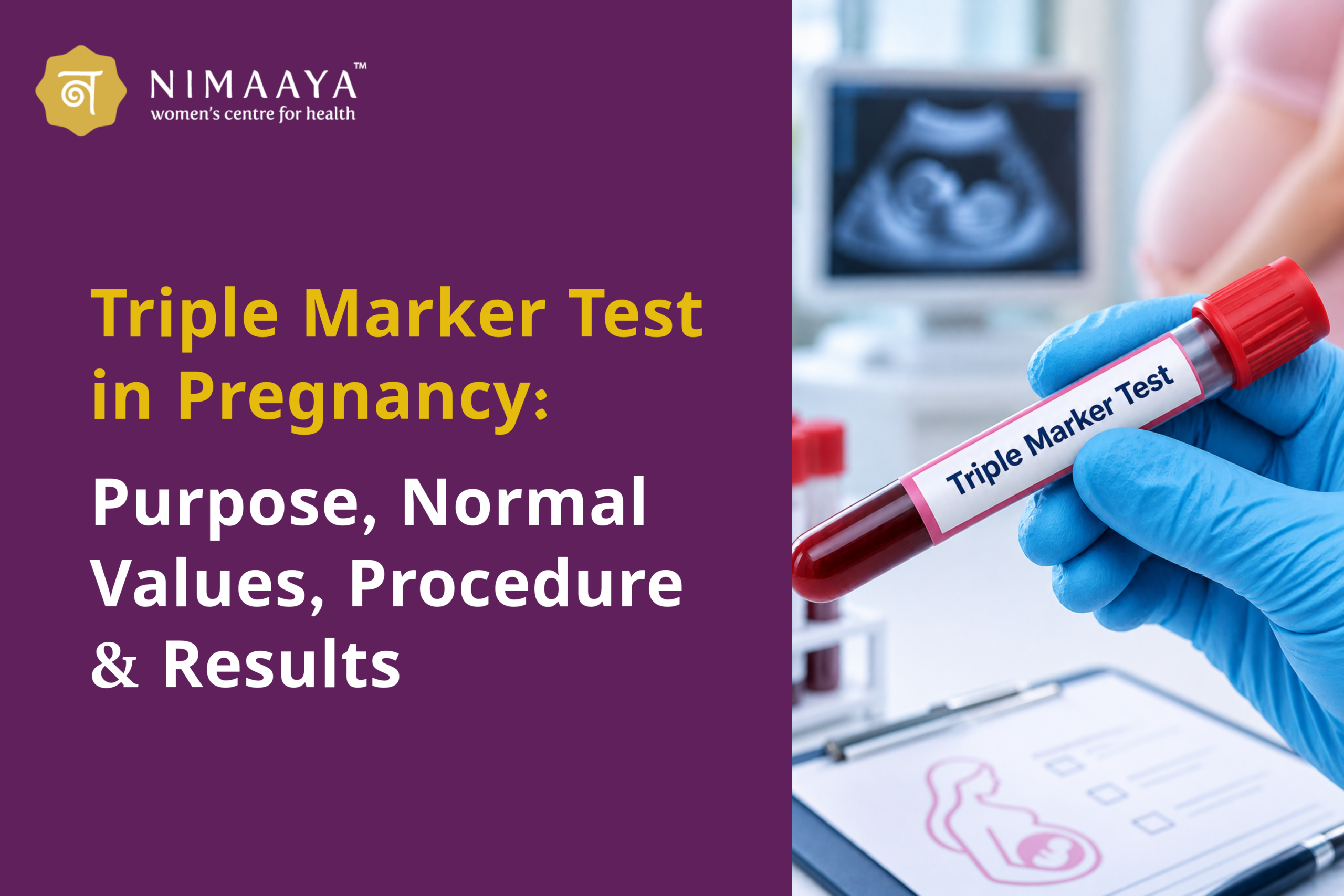
The Triple Marker Test is a simple report test of prenatal blood screening performed during the second trimester of pregnancy to estimate the risk of certain chromosomal abnormalities and neural tube defects in the developing baby in the womb. It measures 3 substances in the mother’s blood and they are Alpha-Fetoprotein (AFP), Human Chorionic Gonadotropin (hCG), and Unconjugated Estriol (uE3).
This test is generally suggested to conduct in between 15 and 20 weeks of pregnancy. It analyses the levels of these three markers along with maternal age, gestational age and other pregnancy-related factors to calculate the likelihood of certain foetal conditions of a woman.
The three markers measured in the Triple Marker Test are:
- Alpha-Fetoprotein (AFP): AFP is a protein which is produced by the developing baby’s liver. AFP enters the mother’s bloodstream through the placenta. Higher-than-expected AFP levels may indicate an increased risk of open neural tube defects, such as spina bifida and anencephaly.
- Human Chorionic Gonadotropin (hCG): hCG is a hormone produced by the placenta during pregnancy. Its levels are assessed as part of the screening calculation. Higher or lower levels than expected may contribute to the risk assessment for chromosomal conditions, including Down syndrome.
- Unconjugated Estriol (uE3): uE3 is a form of estrogen produced through the combined activity of the developing baby and placenta. Lower-than-expected levels may be associated with an increased risk of certain chromosomal abnormalities.
The Triple Marker Test is also known as the Triple Screen Test or Triple Marker Blood Test. It is usually a non-invasive screening method that requires a blood sample from the pregnant woman.
But, it is important to understand that this test does not confirm whether the baby has a any chromosomal or developmental condition after the results come. Instead, it identifies pregnancies that may require further evaluation and other reports necessarily. If the results show an increased risk, the doctor may recommend taking additional investigations, such as a detailed ultrasound, Non-Invasive Prenatal Testing (NIPT) or diagnostic testing, depending on the clinical reports findings.
Purpose of the Triple Marker Test During Pregnancy
The triple marker test is primarily used to screen for the risk of certain chromosomal abnormalities and developmental defects in the developing baby. This test helps doctors identify risky pregnancies that may require more careful screening or medical evaluation.
This test helps to screen conditions like the below:
- Down Syndrome (Trisomy 21): Genetic condition caused by an extra copy of chromosome 21.
- Edwards Syndrome (Trisomy 18): Chromosomal condition caused by an extra copy of chromosome 18.
- Neural Tube Defects: Developmental defects affecting the baby’s brain or spinal cord, such as spina bifida and anencephaly.
- Patau Syndrome (Trisomy 13): Chromosomal condition caused by an extra copy of chromosome 13.
The test also helps identify pregnancies with abnormal marker levels that may need further evaluation.
When is the triple marker test done during pregnancy?
The triple marker test is usually done between 15 and 20 weeks of pregnancy. 16-18 weeks is often the preferred time for screening. AFP, hCG and uE3 levels during this second-trimester period help evaluate the risk of certain foetal conditions.
It is important to test at the right time because the levels of these markers change during pregnancy. Misestimating gestational age can also affect how the results are interpreted. Doctors said an ultrasound report can be used to determine how far along a woman is in her pregnancy.
How long does the test last?
Blood collection usually takes a few minutes, and the entire appointment may take 15-30 minutes. The time it takes to get reports depends on the laboratory.
Is the Triple Marker Test possible after 20 weeks?
The test is usually recommended between 15 and 20 weeks. But after this time frame, it may not be as useful. Depending on the stage of the pregnancy, the doctor may suggest other screening or diagnostic tests.
How Does the Triple Marker Test Work?
In pregnancy, proteins and hormones produced by the placenta and the developing baby enter the mother’s bloodstream. The Triple Marker Test measures three things: AFP, hCG and uE3.
The lab compares their levels to what is expected for the stage of pregnancy. The results are combined with things like:
- Maternal age
- Gestational age
- Maternal weight
- Relevant medical history
What Does the Triple Marker Test Measure?
The test then uses this information to estimate the risk of certain chromosomal abnormalities and neural tube defects. If the results suggest a greater risk, the doctor may recommend more screening or diagnostic tests.
Alpha-Fetoprotein (AFP)
AFP is a protein that is mainly produced in the liver of the developing baby. If levels are higher than expected it could be a sign of increased risk of neural tube defects . Lower levels could help determine risk of Down syndrome .
Human Chorionic Gonadotropin (hCG)
hCG is a hormone made by the placenta during pregnancy. Higher than expected levels may be associated with an increased risk of Down syndrome and lower levels can be helpful in assessing other chromosomal conditions.
Unconjugated Estriol (uE3)
uE3 is an oestrogen produced by the combined action of the developing baby and the placenta. Lower than expected levels may be associated with an increased risk of Down syndrome or Edwards syndrome.
Which Conditions Can the Triple Marker Test Screen For?
The triple marker test helps to estimate the risk of chromosomal abnormalities and neural tube defects in the developing baby. It screens for the following conditions:
Down Syndrome (Trisomy 21)
Down syndrome is a genetic condition caused by an extra copy of chromosome 21. It can affect a child’s physical development, learning abilities and overall health. The Triple Marker Test assesses the risk based on the levels of AFP, hCG and uE3.
Edwards Syndrome (Trisomy 18)
Edwards syndrome is a chromosomal condition caused by an extra copy of chromosome 18. It can lead to serious developmental abnormalities and affect the baby’s organ development.
Neural Tube Defects
Neural tube defects occur when the baby’s brain or spinal cord does not develop properly during early pregnancy. The Triple Marker Test uses AFP levels to screen for an increased risk of certain open neural tube defects, including:
- Spina Bifida: A birth defect in which the baby’s spinal cord and surrounding structures do not develop completely.
- Anencephaly: A serious birth defect in which major parts of the baby’s brain and skull do not develop properly.
Important: The Triple Marker Test is a screening test, not a diagnostic test. An abnormal result indicates an increased risk and does not confirm that the baby has any of these conditions. Further evaluation may be recommended by the doctor.
Who Should Consider a Triple Marker Test?
The Triple Marker Test may be recommended for pregnant women who need second-trimester prenatal screening. A doctor may suggest this test in the following situations:
- Women Above 35 Years: Maternal age may influence the risk of certain chromosomal abnormalities.
- Missed First-Trimester Screening: Women who did not undergo earlier screening may be offered second-trimester screening.
- Previous Pregnancy Complications: Women with a history of pregnancies affected by chromosomal abnormalities or birth defects may need additional risk assessment.
- Family History: Couples with a family history of certain genetic conditions may require further screening.
- Abnormal Ultrasound Findings: Screening may be recommended when ultrasound findings indicate a possible developmental concern.
The decision to undergo the test depends on pregnancy history, gestational age and medical assessment. Your obstetrician or gynaecologist can help determine whether it is appropriate for your pregnancy.
Triple Marker Test Procedure: What to Expect?
The Triple Marker Test is a simple blood test that requires a sample from the pregnant woman’s arm. The procedure is non-invasive and usually takes only a few minutes.
Preparation Before the Test
Before undergoing the test, keep the following points in mind:
- Fasting: Fasting is generally not required. Follow the laboratory’s instructions.
- Medical History: Share relevant medical history, including previous pregnancy complications.
- Pregnancy Details: Provide accurate information about gestational age, maternal weight and age.
- Ultrasound Reports: Carry recent ultrasound reports to help confirm pregnancy duration.
Blood Sample Collection
A healthcare professional collects a small blood sample from a vein in your arm using a sterile needle. The sample is sent to a laboratory to measure AFP, hCG and uE3 levels. The blood collection usually takes a few minutes, and no hospital admission is required.
How Long Does It Take to Get Triple Marker Test Results?
Triple Marker Test reports are generally available within 1–3 working days, depending on the laboratory. Reporting time may vary based on sample processing, testing facilities and laboratory workload. Your doctor will interpret the results and explain whether further evaluation is needed.
What Are the Normal Values for a Triple Marker Test?
The normal values of the Triple Marker Test depend on the stage of pregnancy, maternal age and laboratory reference ranges. The test measures AFP, hCG and uE3 levels, which are commonly interpreted using MoM (Multiple of the Median) values.
MoM compares a woman’s marker levels with the median levels expected at the same gestational age. A value of 1.0 MoM represents the median for that pregnancy stage.
The three markers include:
- AFP: Measures the level of alpha-fetoprotein in the mother’s blood. Higher or lower MoM values may contribute to the assessment of fetal abnormalities.
- hCG: Measures the pregnancy-related hormone produced by the placenta. Its MoM value helps assess the risk of certain chromosomal conditions.
- uE3: Measures unconjugated estriol levels. Lower-than-expected values may contribute to the risk assessment for chromosomal abnormalities.
There is no single universal normal range for all three markers because their levels change throughout pregnancy. Results must be interpreted using gestational age-specific reference values and other maternal factors.
Note: A marker value outside the expected range does not confirm a fetal abnormality. Your doctor should interpret the complete screening report rather than evaluating individual values separately.
Triple Marker Test Results: Normal, High and Low Levels
Triple Marker Test results help estimate the risk of certain chromosomal abnormalities and neural tube defects. The report classifies the pregnancy as low-risk or high-risk based on marker levels and maternal factors.
What Does a Normal Triple Marker Test Result Mean?
A normal or low-risk result indicates that the estimated risk of the screened conditions is lower than the laboratory’s screening cut-off. However, it does not completely rule out chromosomal abnormalities or birth defects.
What Does a Positive Triple Marker Test Mean?
A positive or high-risk result means the screening has identified an increased likelihood of a particular condition. It does not confirm that the baby has an abnormality. The doctor may recommend further evaluation, such as NIPT, detailed ultrasound or diagnostic testing.
What Does a Negative Triple Marker Test Mean?
A negative or low-risk result indicates that the calculated risk is below the screening cut-off. Routine prenatal care should continue because the test cannot detect every chromosomal or developmental condition.
What Do High or Low Marker Levels Indicate?
Changes in AFP, hCG and uE3 levels may contribute to the risk assessment for different conditions.
| Marker | Higher-than-expected levels | Lower-than-expected levels |
| AFP | May indicate an increased risk of open neural tube defects | May contribute to the risk assessment for Down syndrome |
| hCG | May be associated with an increased risk of Down syndrome | May contribute to the risk assessment for Edwards syndrome |
| uE3 | Usually interpreted alongside other markers | May be associated with an increased risk of Down syndrome or Edwards syndrome |
Marker levels can also be affected by incorrect pregnancy dating, multiple pregnancy and other maternal or pregnancy-related factors.
Important: Individual marker levels cannot diagnose a fetal condition. Doctors interpret the combined results, MoM values and pregnancy details to determine whether further investigations are needed.
What Happens If the Triple Marker Test Is Abnormal?
An abnormal Triple Marker Test result indicates an increased risk of certain fetal conditions, but it does not confirm a diagnosis. The doctor may recommend further evaluation to understand the reason behind the result.
Depending on the screening findings, the next steps may include:
- Doctor Consultation: Discuss the report with an obstetrician or maternal-fetal medicine specialist.
- Review of Pregnancy Details: Recheck gestational age, maternal details and previous ultrasound findings.
- Detailed Ultrasound: Examine the baby’s growth, anatomy and development for possible abnormalities.
- Additional Screening: NIPT may be recommended to assess the risk of certain chromosomal conditions more accurately.
- Genetic Counselling: Understand the screening results, possible risks and available testing options.
- Diagnostic Testing: Amniocentesis may be considered when clinically indicated to confirm certain chromosomal abnormalities.
The recommended follow-up depends on the specific marker pattern, ultrasound findings and individual pregnancy history. Your doctor will guide you through the appropriate next steps.
How Accurate Is the Triple Marker Test?
The Triple Marker Test is a screening test that estimates the risk of certain chromosomal abnormalities and neural tube defects. Its accuracy depends on factors such as maternal age, gestational age and the levels of AFP, hCG and uE3. It cannot confirm or completely rule out a fetal condition.
Several factors influence the accuracy of the test:
- Maternal Age: Age is considered when calculating the risk of chromosomal abnormalities, particularly Down syndrome.
- Gestational Age: Accurate pregnancy dating is essential because marker levels change as pregnancy progresses.
- Maternal Weight: Weight is used to adjust marker measurements during risk calculation.
- Pregnancy Type: Singleton and multiple pregnancies have different marker patterns, which affect result interpretation.
- Medical History: Relevant maternal health conditions and pregnancy details may influence screening calculations.
Screening Accuracy vs Diagnostic Certainty
The Triple Marker Test estimates the likelihood of a condition rather than confirming its presence. Its screening performance varies depending on the condition being assessed and the laboratory’s testing method.
Two types of incorrect results are possible:
- False-Positive Result: The report indicates an increased risk even though the baby does not have the screened condition.
- False-Negative Result: The report indicates a low risk even though the baby has the condition.
Therefore, an abnormal result may require additional screening or diagnostic tests, such as NIPT or amniocentesis, based on the doctor’s recommendation.
Benefits of the Triple Marker Test
The Triple Marker Test provides useful information about the risk of certain chromosomal abnormalities and neural tube defects during pregnancy. Its key benefits include:
- Non-Invasive Screening: Requires only a blood sample from the mother without directly involving the baby.
- Early Risk Assessment: Helps assess the risk of certain fetal conditions during the second trimester.
- Identifies High-Risk Pregnancies: Highlights pregnancies that may require additional screening or medical evaluation.
- Guides Further Investigations: Helps doctors decide whether tests such as NIPT, detailed ultrasound or diagnostic testing are needed.
- Supports Pregnancy Care: Provides additional information to help doctors plan appropriate prenatal monitoring and care.
Risks and Limitations of the Triple Marker Test
The Triple Marker Test is a safe, non-invasive screening test during pregnancy. However, like other prenatal screening tests, it has certain limitations that women should understand before undergoing it.
Is the Triple Marker Test Safe During Pregnancy?
Yes. The test is generally safe because it requires only a blood sample from the mother’s arm. It does not involve radiation or direct contact with the developing baby.
Common Side Effects of Blood Collection
Most women do not experience significant side effects. Some may experience:
- Mild pain or discomfort at the needle insertion site.
- Temporary bruising or swelling.
- Slight dizziness or faintness during blood collection.
These effects usually resolve without medical treatment.
Limitations of Triple Marker Screening
Although the test helps assess the risk of certain fetal conditions, it has some limitations:
- Not Diagnostic: It cannot confirm whether the baby has a chromosomal abnormality or birth defect.
- Possible Inaccurate Results: False-positive and false-negative results can occur.
- Gestational Age Dependency: Incorrect pregnancy dating can affect result interpretation.
- Limited Detection: It does not screen for every genetic or developmental condition.
- Further Testing May Be Needed: High-risk results may require additional screening, diagnostic tests or genetic counselling.
Difference Between Double Marker, Triple Marker and Quadruple Marker Tests
Double, Triple and Quadruple Marker Tests are prenatal screening tests used to assess the risk of certain chromosomal abnormalities and fetal developmental conditions. They differ in the number of markers measured and the stage of pregnancy when they are generally performed.
| Parameter | Double Marker | Triple Marker | Quadruple Marker |
| Number of markers | 2 | 3 | 4 |
| AFP | No | Yes | Yes |
| hCG | Yes | Yes | Yes |
| PAPP-A | Yes | No | No |
| uE3 | No | Yes | Yes |
| Inhibin-A | No | No | Yes |
| Typical timing | First trimester | Second trimester | Second trimester |
Also Read: Double Marker Test vs Triple Marker Test: Key Differences in Detail
Which Test Is Recommended?
The choice depends on the stage of pregnancy, previous screening results and individual medical history. The Double Marker Test is generally performed during the first trimester, while Triple and Quadruple Marker Tests are used during the second trimester.
Your obstetrician or gynaecologist can recommend the appropriate screening option based on your pregnancy and medical requirements.
Triple Marker Test Cost in India
The cost of a Triple Marker Test in India varies depending on the diagnostic centre, laboratory facilities and location. The total cost may also differ if a doctor’s consultation or additional investigations are required.
Factors that influence the test cost include:
- Diagnostic Centre: Prices may vary between hospitals, diagnostic centres and independent laboratories.
- Laboratory Facilities: Testing methods, equipment and laboratory standards may affect pricing.
- Location: Test charges can differ across cities and healthcare facilities.
- Additional Services: Doctor consultations, ultrasound examinations or follow-up investigations may be charged separately.
Before booking the test, contact your diagnostic centre to confirm the current price and whether the charges include sample collection and report preparation.
What Happens After the Triple Marker Test?
After the Triple Marker Test, the laboratory analyses the blood sample and prepares a report showing the levels of AFP, hCG and uE3. Your doctor reviews these results to assess the risk of certain fetal conditions and decide whether further evaluation is needed.
Understanding Your Report
The report includes individual marker levels, MoM values and an estimated risk assessment. Your doctor interprets these findings based on gestational age, maternal age and other pregnancy details.
Follow-Up Consultation With Your Doctor
Discuss your report with your obstetrician or gynaecologist. They can explain whether the results indicate a low or high risk and address any concerns.
Additional Tests If Required
If the screening indicates an increased risk, your doctor may recommend:
- Detailed ultrasound examination.
- Non-Invasive Prenatal Testing (NIPT).
- Genetic counselling.
- Amniocentesis, if diagnostic testing is clinically indicated.
Planning the Next Steps in Pregnancy Care
Based on the results and any additional investigations, your doctor will recommend an appropriate pregnancy monitoring and follow-up plan. Regular antenatal check-ups remain important throughout pregnancy, regardless of the screening results.
Read Also: डबल मार्कर टेस्ट की रिपोर्ट को कैसे समझें?
Why Choose Nimaaya for Pregnancy Care?
At Nimaaya Women’s Centre for Health, we provide comprehensive pregnancy care with a focus on maternal health and the baby’s development. Our team supports expectant mothers through every stage of pregnancy with:
- Experienced Specialists: Guidance from experienced obstetricians and gynaecologists.
- Comprehensive Antenatal Care: Regular pregnancy check-ups and maternal health monitoring.
- Pregnancy Screening Guidance: Support in understanding prenatal screening tests and their results.
- Individualised Care: Pregnancy monitoring and recommendations based on individual medical needs.
- Continuous Support: Guidance throughout pregnancy, from early antenatal visits to delivery planning.
Our aim is to help expectant parents make informed decisions through appropriate medical guidance and personalised pregnancy care.
Frequently Asked Questions About the Triple Marker Test
1. Is the Triple Marker Test mandatory during pregnancy?
No, the Triple Marker Test is not mandatory. It is an optional prenatal screening test that your doctor may recommend based on your pregnancy history, gestational age and screening requirements.
2. What happens if the Triple Marker Test is positive?
A positive result indicates an increased risk of certain chromosomal abnormalities or neural tube defects. It does not confirm a condition. Your doctor may recommend further screening, ultrasound examinations or diagnostic testing.
3. What does a negative Triple Marker Test mean?
A negative result indicates a lower estimated risk of the conditions screened by the test. However, it does not completely rule out chromosomal abnormalities or birth defects.
4. What is the normal range of the Triple Marker Test?
The normal values depend on gestational age and laboratory reference ranges. Results are generally interpreted using MoM (Multiple of the Median) values rather than a single universal range.
5. Is fasting required before the Triple Marker Test?
No, fasting is generally not required before the Triple Marker Test. However, follow the instructions provided by your diagnostic laboratory.
6. Can the Triple Marker Test detect Down syndrome?
The test can estimate the risk of Down syndrome (Trisomy 21) by analysing AFP, hCG and uE3 levels. However, it cannot confirm the condition.
7. Is the Triple Marker Test painful or risky?
The test is generally safe and involves a simple blood sample collection. You may experience mild discomfort, temporary bruising or slight pain at the needle insertion site.
8. Can an abnormal Triple Marker Test result become normal later?
Marker levels can vary during pregnancy, but an abnormal screening result should not be ignored or assumed to become normal. Your doctor may recommend further evaluation to understand the findings.
9. Which is better: Double Marker or Triple Marker Test?
Neither test is universally better. The Double Marker Test is generally performed during the first trimester, while the Triple Marker Test is performed during the second trimester. The appropriate test depends on pregnancy stage and medical assessment.
10. What is the best time to undergo the Triple Marker Test?
The Triple Marker Test is generally performed between 15 and 20 weeks of pregnancy. The 16–18-week period is often preferred, depending on the doctor’s recommendation and laboratory requirements.